
A three-minute inspection at the right cadence prevents the single most expensive maintenance mistake we see at our sharpening floor: pulling a blade after teeth chip instead of at first burr. The cost of that mistake is roughly 31 percent of the blade’s remaining lifetime, or about 5,000–8,000 lost cuts per blade. The inspection itself requires a loupe, a caliper, and a rag — all under $40 total.
What Are the Five Signs a Cold Saw Blade Needs Sharpening?
Across 4,180 intake orders at Grand Blanc Industries from 2024 to 2026, five symptoms account for nearly every dull-blade pull. In order of frequency: burr on the workpiece (71 percent of orders), audible chatter on cut entry (58 percent), slowed feed at the same load (47 percent), burn marks on the chip or tooth (39 percent), and chipped or rounded teeth visible under 10× magnification (28 percent). Many blades show multiple signs at once — and most blades arrive with at least one symptom the operator missed earlier.
The order matters because it tells you what to look for first. Burr formation appears earliest in the blade’s wear curve — usually well before the operator hears anything unusual. Catching the blade at burr saves the next 5,000+ cuts of its lifetime.
How Often Should You Inspect the Blade?
Inspection cadence scales with material aggressiveness. Stainless steel and tool steel work-harden quickly and burn the cutting edge fast, so check every 100 cuts. Mild steel is forgiving — every 200 cuts is enough. Aluminum runs cooler and cleaner; every 400 cuts catches dull blades early without burning operator time. Titanium and Inconel: every 50–75 cuts.
The cadence is per-shift, not per-job. If a single batch runs longer than the cadence interval, stop mid-batch for the check. Skipping an inspection because “we’re almost done” is the single most common precursor to a burned workpiece in our customer interviews.
What’s the Three-Minute Inspection Routine?
- Stop the saw, raise the head. Wait 30 seconds for the blade to cool.
- Touch the chip. Hot enough to burn skin = SFPM too high or coolant flow too low.
- Run a fingernail across the cut edge of the last workpiece. A clean cut leaves a slight feather; a dull blade leaves a burr you can catch.
- Listen on cut entry. The next entry should sound smooth. Chatter = dull, misclamped, or both.
- Visual check under 10× loupe. Look for rounded tooth tips, micro-chips, or burn discoloration on the cutting edges.
- Measure diameter at three points with a caliper. Compare to your sharpen log; one or more reduced-diameter readings = approaching retirement.
Total: under three minutes. The five tools needed cost less than $40 combined.
What Does a Properly Cut Chip Tell You?
A correctly cut chip is curled, warm but not hot, uniformly thick across its width, and metallic-bright in color. Burned chips (blue or brown) signal high SFPM or insufficient coolant — the cutting edge is over-temperature. Powdery or fine-grained chips signal a dull blade rubbing the workpiece instead of cutting it; that blade is past prime and should ship out today. Long, stringy aluminum chips are normal for non-ferrous work and not a wear signal.
The chip is the most honest diagnostic available — every cut produces a fresh one, and reading it takes two seconds. Train every operator to glance at the chip after the first cut of each batch.
What Happens If You Wait Too Long?
Across our intake dataset, blades arriving with chipped teeth show a 31 percent lower lifetime resharpen count than blades pulled at first burr. The cause is not the chipped tooth itself; it is the over-tempering that happens to the tooth body in the cuts preceding the chip. Over-tempered steel cannot hold an edge as long after sharpening — every subsequent cycle is shorter than it should be.
The economic translation: on a 22-cycle median blade, a 31 percent reduction is roughly 7 cycles lost. At $19 per cycle of deferred replacement value, that is $133 in lifetime savings — gone. For the full ROI math on what each cycle is worth, see sharpening vs. replacing: the ROI calculation.
Which sign appears earliest?
Burr formation on the workpiece. It precedes chatter and burn marks in most blade lifecycles. Pull at first burr — not later.
Can I inspect a blade while it’s still on the saw?
Partially. Stop, raise, cool, and visual-check while still mounted. For tooth-tip inspection under loupe, dismount the blade so you can rotate it through 360°.
What if I’m not sure whether the blade needs sharpening?
Send it. A $19 sharpening on a blade with 200 cuts of remaining edge is cheaper than the workpiece scrap and rework caused by one burned cut.
How do I document inspection findings?
A blade log card per machine with date, sharpen cycle, and pull-trigger code (B = burr, C = chatter, F = feed, X = burn, T = tooth). Five-minute habit, multi-cycle payoff.
Are these inspection rules different for carbide-tipped blades?
Same five signs, slightly different appearance. Carbide tips chip rather than round when dull, and burn marks appear at lower SFPM than HSS. Inspection cadence is identical.
Featured products
-
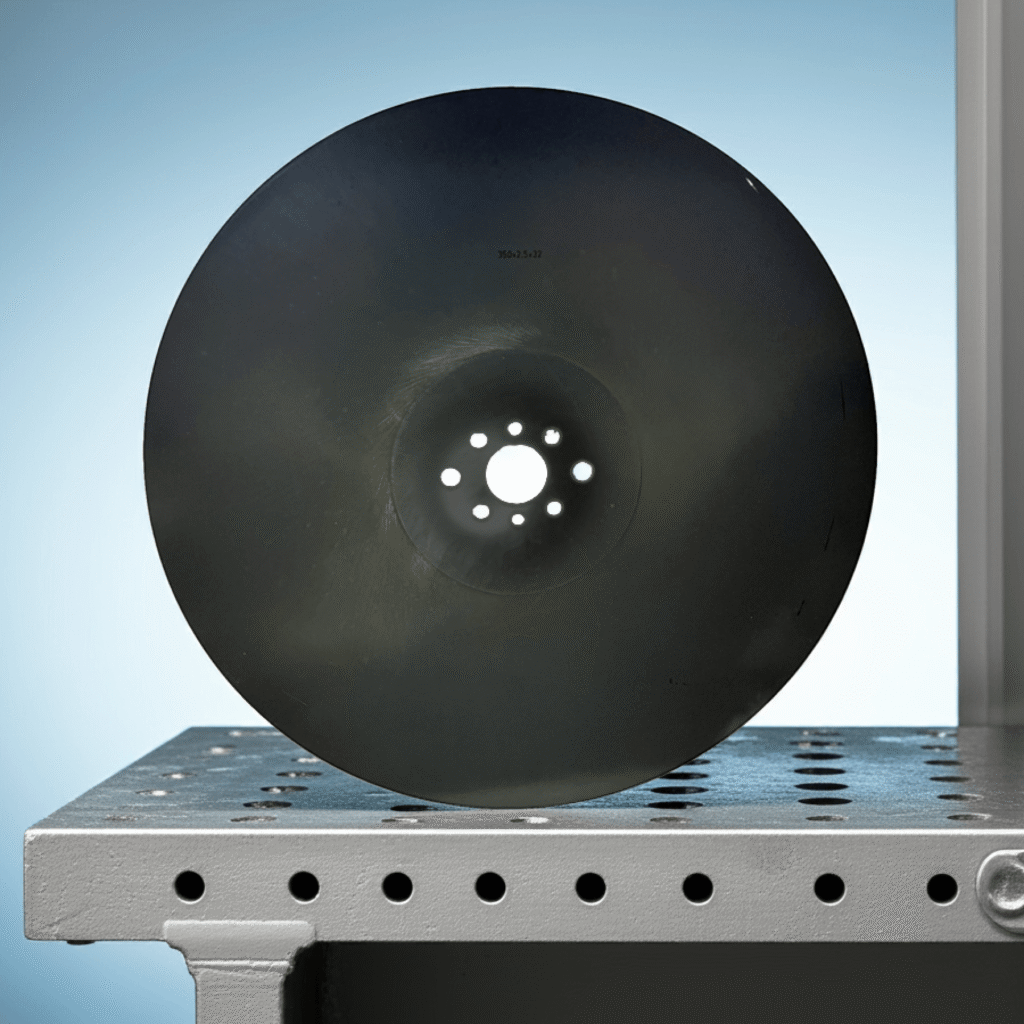
300-330mm diameter – 2.5mm thickness, 40mm Bore Reconditioned Black Oxide Blade
$80.00 -
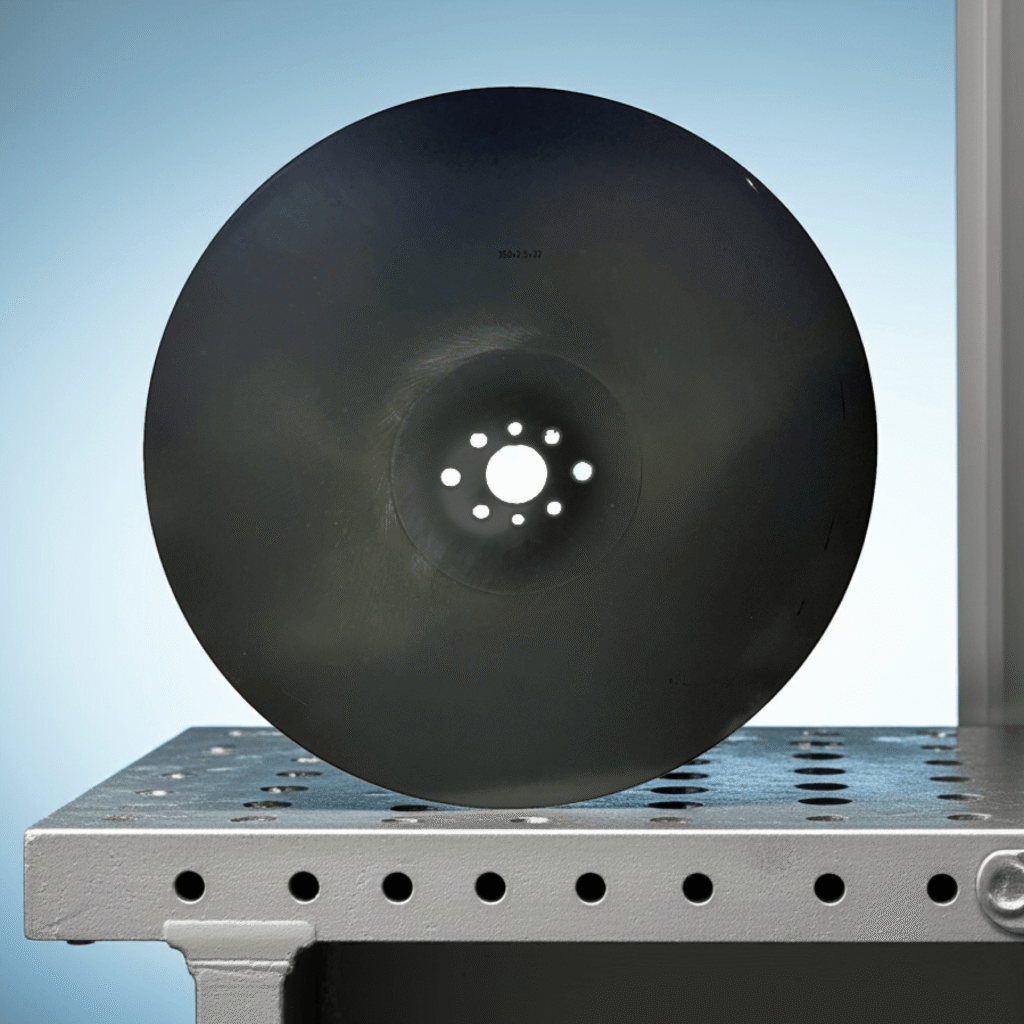
315mm-2.5mm-32mm M2 HSS Saw Blade
$138.97 -
350mm-2.5mm-32mm M2 HSS Cold Saw Blade
$159.04 -
350mm-2.5mm-32mm TIALN Coated Blade
Original price was: $201.96.$190.50Current price is: $190.50.
The Three-Minute Rule
Three minutes per cadence interval is the trade. The blade earns it back at 31 percent more lifetime cycles. There is no cheaper way to extend cold saw blade life than to stop the saw on schedule and look at the chip.
- Scotchman Industries. 5 Tips to Extend the Life of Your Saw Blade. Retrieved 2026-06-22 from scotchman.com.
- Grand Blanc Industries. Resharpening intake log, 2024–2026 (n = 4,180 orders). Proprietary.
