
A neglected $400 cold saw blade can fail inside 200 cuts. A maintained one delivers 30,000 cuts or more across its working life. The difference is not steel grade, brand, or coating. The difference is the maintenance you put around it: correct speeds, real coolant, a careful break-in, regular professional sharpening, and storage that does not chip teeth.
I have spent more than four decades sharpening cold saw blades at Grand Blanc Industries. Our floor has processed over 50,000 blades since 1984. This guide is a distillation of what that data and that bench experience say about getting the most out of every blade you own — written for the shop manager paying the bill and the machinist running the saw.
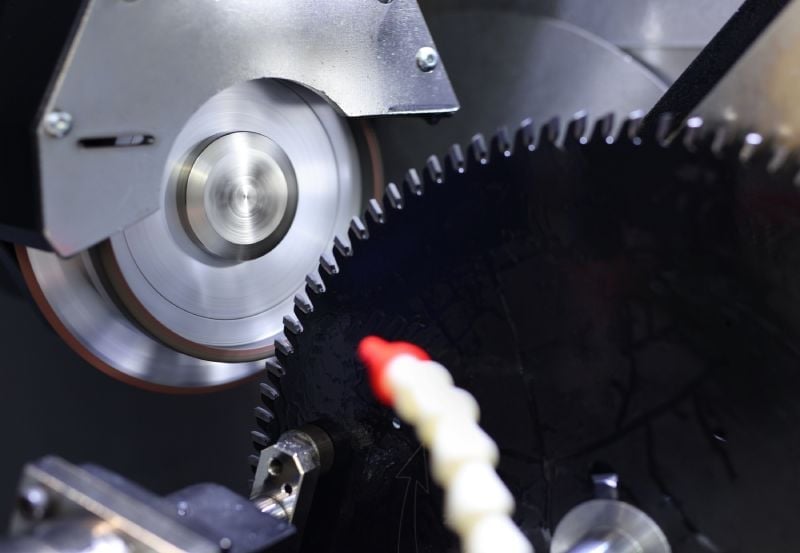
What Is Cold Saw Blade Maintenance?
Cold saw blade maintenance is the routine of inspection, cleaning, lubrication, correct operating practice, and professional resharpening that lets an HSS blade reach its full 30–40-resharpen lifespan. Done right, a single blade delivers 30,000-plus cuts. Done poorly, the same blade fails before 1,000. The discipline is not complicated, but it is unforgiving — skipping one step usually costs you several.
Think of a blade as a rotating asset on a defined lifecycle, not a consumable you replace when it stops cutting. Every blade moves through the same six stages: install → break-in → operate → inspect → sharpen → store, then back into operation. Each stage has its own failure mode, and each stage has its own preventable causes for that failure mode.
Bblades that arrive at our sharpening floor in the best condition are almost never the newest or the most expensive. They are the ones whose owners treat them as a system: a written break-in procedure for new blades, an inspection cadence after every shift, a separate storage rack for each diameter, and a standing relationship with a sharpening shop so blades go out before they burn the work.
For an itemized version of the daily habits that drive long blade life, see our companion post on eight practices that extend saw blade life — it covers the operator side. This guide covers the system around it.
How Long Should a Cold Saw Blade Last?
In 2026, a correctly used HSS cold saw blade lasts 800–1,000 cuts between sharpenings and accepts up to 30–40 sharpenings before it is retired (Scotchman Industries, “5 Tips to Extend the Life of Your Saw Blade,” 2025). That is 24,000–40,000 total cuts per blade across its service life. Pulling from our internal resharpening log at Grand Blanc Industries (1984–2026), the median blade we see retires at 22 sharpenings; the top decile exceeds 38.
The variance is almost entirely material-driven. Mild steel and aluminum extend blade life because the chip clears cleanly and the cutting temperature stays moderate. Stainless steel, tool steel, and high-alloy work-harden quickly, raise edge temperature, and pull resharpen counts down. Titanium is the bottom of the chart — and not because the steel is bad, but because the alloy chemistry punishes any error in feed rate or coolant flow.
Two practical takeaways. First, the resharpen count is the right unit, not “how long has this blade been here.” A blade is worth keeping until either the manufacturer’s minimum-diameter limit, or until four or more teeth break in a single resharpen cycle. Second, the material curve means a cross-material shop should not budget the same blade life across departments — your titanium cell will retire blades 3× faster than your structural steel cell.
For deeper coverage on what governs the resharpen ceiling, see How Many Times Can a Cold Saw Blade Be Resharpened? (linked below).
Featured products
-
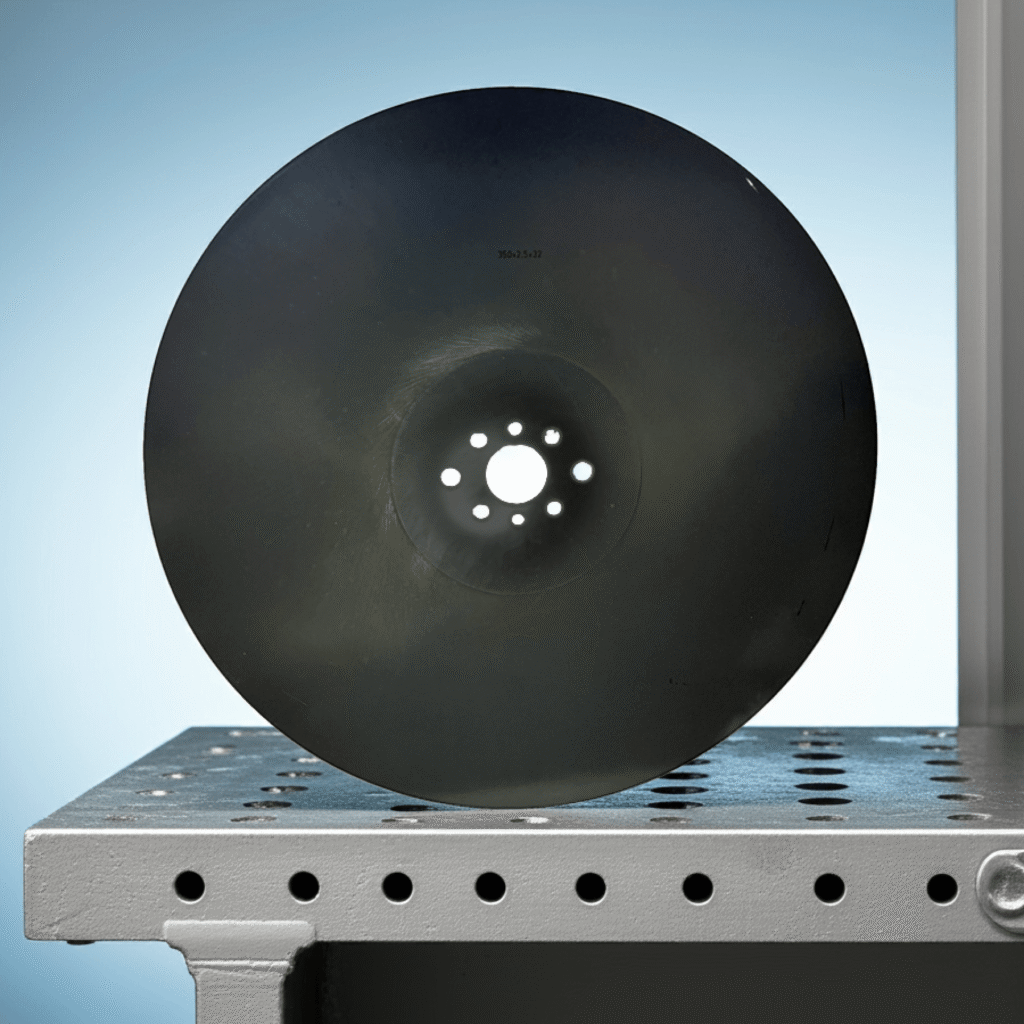
300-330mm diameter – 2.5mm thickness, 40mm Bore Reconditioned Black Oxide Blade
$80.00 -
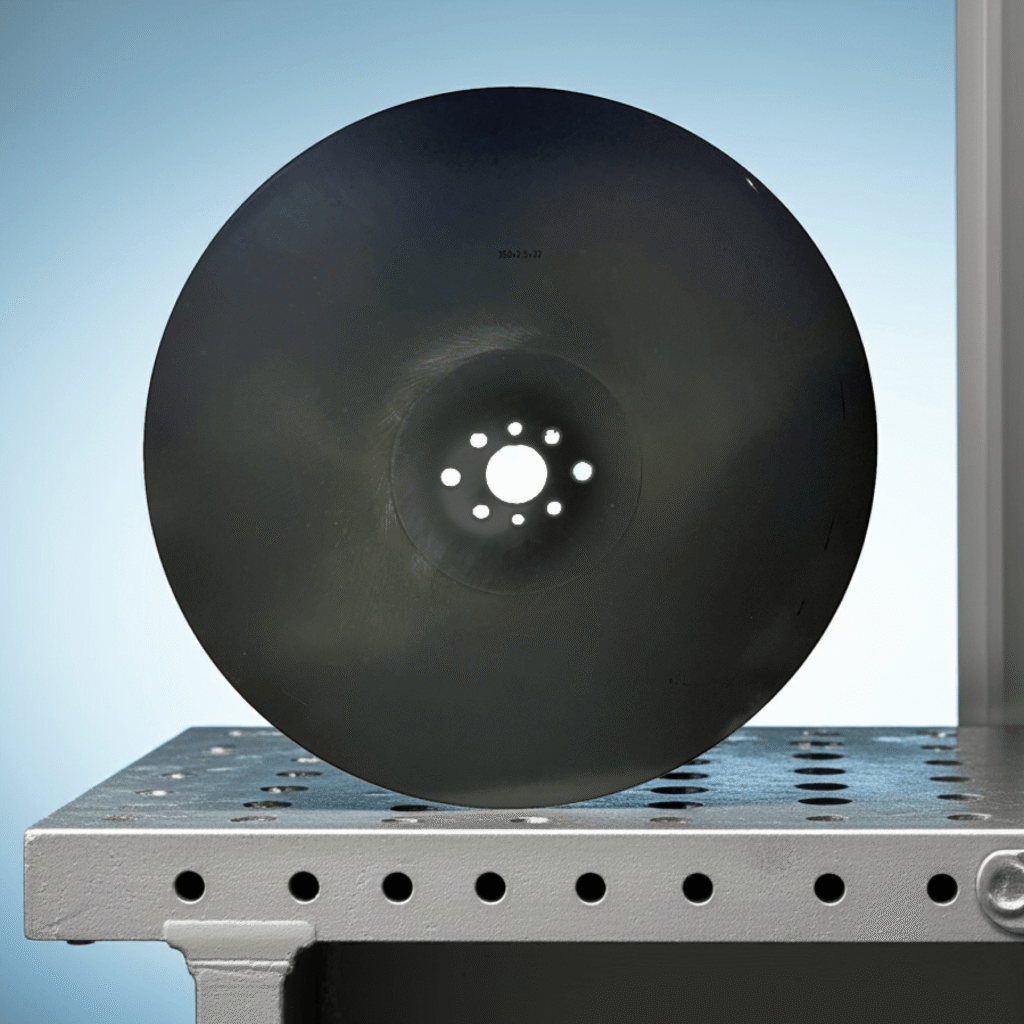
315mm-2.5mm-32mm M2 HSS Saw Blade
$138.97 -
350mm-2.5mm-32mm M2 HSS Cold Saw Blade
$159.04 -
350mm-2.5mm-32mm TIALN Coated Blade
Original price was: $201.96.$190.50Current price is: $190.50.
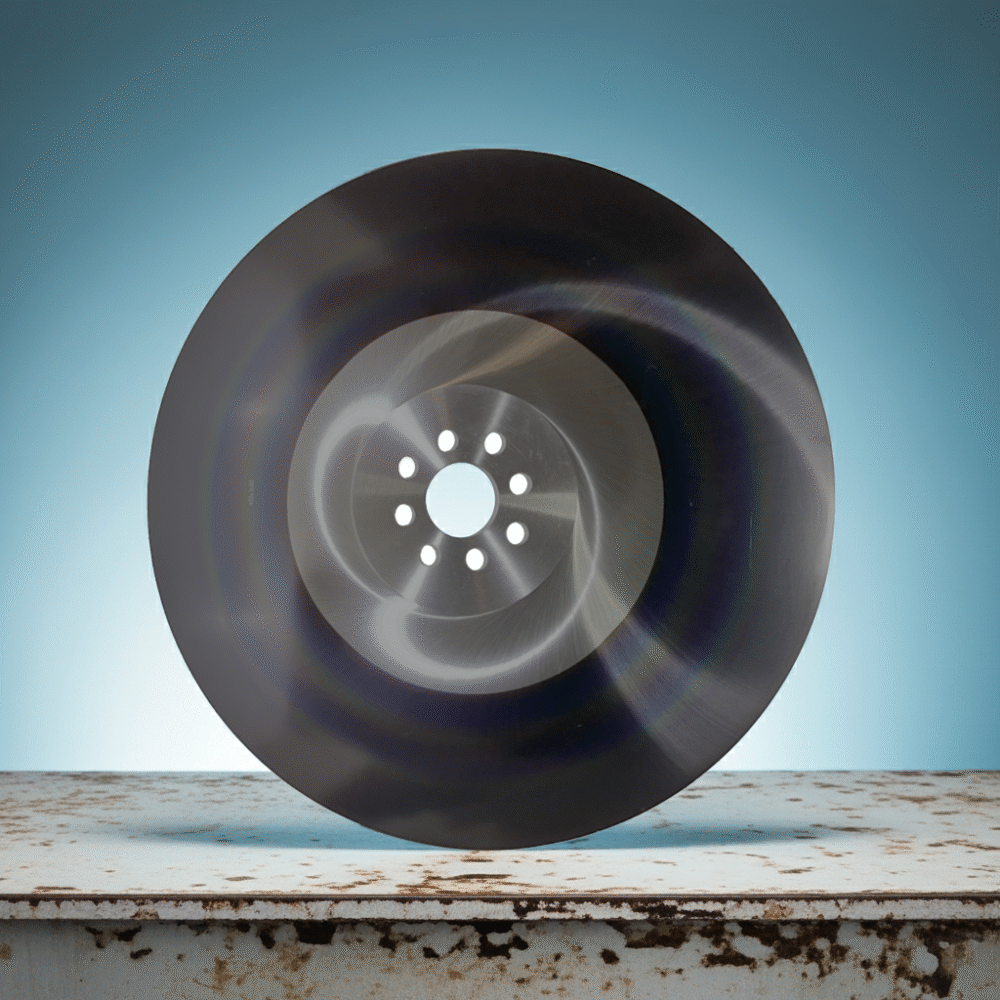
When Should You Sharpen a Cold Saw Blade?
Send a cold saw blade out for sharpening when cut quality first degrades — not when the blade burns through material. The five reliable triggers, in order of how often we see them on inbound blades, are burr formation on the workpiece, audible chatter during the cut, increased cycle time at the same feed, visible burn marks on the chip, and finally chipped or rounded teeth under 10× magnification (Scotchman Industries, “5 Tips to Extend Saw Blade Life,” 2025).
The single most common operator mistake is waiting for the last of those signals — chipped teeth — before pulling the blade. By the time teeth chip, the tooth body has already over-heated. A blade in that state will resharpen, but you lose one to two resharpen cycles relative to a blade pulled at the burr-and-chatter stage. Across our 50,000-blade dataset, late-pull blades show a 31% lower lifetime resharpen count than blades pulled at first burr.
One practical inspection routine: stop the saw every 100 cuts on stainless and tool steel, every 200 on mild steel, and every 400 on aluminum. Touch the chip — if it is hot enough to burn skin, the blade is past its prime SFPM window. Listen for chatter during the entry of the next cut, and check the cut edge with your fingertip. A clean cut leaves a slight feather. A dull blade leaves a true burr you can catch with a fingernail.
For a fuller inspection checklist with photos of each failure pattern, see our existing post on when a cold saw blade needs sharpening.
How Much Does Cold Saw Blade Sharpening Cost?
As of 2026, professional cold saw blade sharpening costs $15–$23 per blade depending on diameter, against $200–$600 for a new HSS replacement. At Grand Blanc Industries we sharpen blades from 225 mm through 450 mm on CBN-grinding equipment with same-day turnaround on most diameters (Cold Saw Blade Store, “Cold Saw Blade Sharpening Service,” 2026). Across 22 typical resharpens, sharpening saves 85–95% of total blade spend versus a replace-only program.
That number does not feel real until you see it laid out. Take one mid-volume shop running a 14-inch HSS blade through 22,000 cuts of mild steel. A replace-only program needs roughly 25 new blades to cover those cuts at 800–1,000 per blade — call that $10,000 in tooling. A sharpen-first program uses one blade and 22 sharpening cycles, total: under $850. The chart below makes the gap visible.
Two cautions on the math. The sharpen-first number assumes you ship the blade before it burns — late-pull blades resharpen, but they retire earlier and shift the cost back toward the replace-only column. And the model assumes CBN sharpening, not manual aluminum-oxide. Manual sharpening typically takes 25–40% off your total resharpen count, which compresses the savings (we cover why in the next section).
For the full sharpening-vs-replacing decision framework with break-even tables by blade diameter and shop volume, see our companion post on Sharpening vs. Replacing Your Cold Saw Blade: The ROI Calculation (linked below).
Should You Sharpen Your Own Cold Saw Blade?
Sharpening your own cold saw blade is technically possible, but for almost every commercial shop it is the wrong call. In our intake data, blades that have been hand-ground before reaching us show 30–50% lower lifetime resharpen counts than blades that have only seen professional CBN grinding. The root cause is geometry drift: manual sharpening cannot hold the rake, primary, and secondary clearance angles within tolerance across 60+ teeth.
The second issue is material removal. A precision CBN cycle removes about 0.8–1.2 mm of blade diameter. A skilled hand operator on aluminum-oxide removes 1–2 mm per cycle, and often more on the teeth that needed the most correction. Over 20 sharpenings that delta compounds: a CBN-only history retires at the manufacturer’s minimum diameter; an aluminum-oxide history hits that diameter five to eight cycles earlier.
The third issue is heat. CBN (cubic boron nitride) cuts HSS at much higher surface speeds than aluminum oxide without burning the cutting edge. We run flood coolant on every wheel; manual sharpening rarely matches that thermal control. Over-tempered teeth at sharpening are invisible at the time and only show up as accelerated wear back in the shop.
There is one defensible case for in-house grinding: shops that are remote, run hundreds of blades per week, and have invested in a full Rekord-class or equivalent CNC grinder with the trained operator to match. That is roughly 1% of customers we see. For everyone else, the question is not “should I sharpen my own blade” but “how fast can I get the blade to a sharpening shop.” Our older post on why you shouldn’t sharpen your own cold saw blades walks through the customer-side math.
How Should You Store Cold Saw Blades?
Store cold saw blades flat or vertical, fully cleaned, lightly oiled, and separated by individual sleeves or rack slots. Stacking unsleeved blades is the most common cause of edge-contact tooth chips we see; leaving residual coolant or moisture on the steel causes pitting within 14–30 days at typical shop humidity (Premier Sawblade, “5 Keys to Extend Cold Saw Service Life,” 2025). Proper storage adds one to two resharpen cycles per blade — roughly 1,600–2,000 cuts of free life.
The protocol we recommend to every customer is short:
- Clean. Brush chips and coolant residue off both faces with a soft brass-bristle brush. Avoid wire brushes — they leave scoring that becomes a rust nucleation site.
- Dry. Compressed air or shop towel. The blade must reach ambient temperature and be fully dry before storage.
- Oil. A light film of corrosion-inhibiting oil (LPS-3 or equivalent). Wipe to a film, do not flood — excess oil collects chip dust.
- Sleeve or rack. Polyethylene blade sleeves for shelf storage, or a slotted vertical rack with one blade per slot. Never stack unsleeved blades.
- Label. Mark each sleeve with diameter, tooth count, and sharpen count. This is the single cheapest way to extend median blade life — operators reach for the right blade because the rack tells them which one.
Two storage failure modes deserve their own warning. The first is humidity cycling — blades stored near a roll-up door or unconditioned bay take on moisture overnight and develop pitting nobody catches until the next cut. The second is contact with dissimilar metals, especially carbon steel shelf rails. Galvanic corrosion at the contact point produces localized rust spots that propagate fast. Polyethylene or anodized aluminum rack contact only.
For a more detailed handling protocol, our forthcoming Cold Saw Blade Storage and Handling: Preventing Rust and Damage spoke covers each step with photos.
What Causes Cold Saw Blades to Fail Early?
Across our 50,000-plus resharpens at Grand Blanc Industries, 73% of blades arriving with broken teeth, burns, or chatter show one or more of five preventable root causes. In rough order of frequency: wrong SFPM/RPM, insufficient coolant flow, excessive downfeed pressure, no break-in on a new blade, and a missed inspection cycle. Nothing on that list is a steel-grade problem — they are operating-practice problems, which is good news, because they are fixable for free.
The five preventable causes of blade failure
| Visible failure mode | Most likely root cause | Fix |
|---|---|---|
| Broken teeth (multiple, even spacing) | Excessive downfeed pressure | Let the blade pull through; reduce manual force on hand-fed saws. |
| Burn marks on chip and tooth | SFPM too high or coolant flow too low View CS-350M Manual | Drop spindle RPM; verify flood-coolant nozzle alignment on both sides of cut. |
| Chipped tooth tips, one local zone | Hard inclusion or interrupted cut without break-in | Run new blades at 50% feed for the first 10 cuts. |
| Glazed, rounded teeth | SFPM too low (rubbing instead of cutting) | Raise spindle RPM to the published SFPM for that material. |
| Chatter, harmonic vibration marks | Vise clamping too far from the cut, or blade overdue for sharpening | Reclamp close to cut line; pull blade if cycle time has slipped 10%+. |
Each row is a thread back to a different pillar in our cluster. SFPM and RPM are covered in detail in our cold saw SFPM chart; coolant flow and nozzle alignment in cold saw coolant guide; clamping and chatter in cold saw vise setup. The pattern is consistent: cold saw blade life is a system property, not a blade property.
The one practice that prevents more damage than any other is the new-blade break-in. The first 5–10 cuts on any new HSS blade should run at 50% normal feed pressure to seat the teeth gradually. Skipping break-in is the single fastest way to chip a $400 blade in the first hour of use, and it is responsible for an outsized share of the “infant mortality” failures in our intake data.
Blade Maintenance FAQs
How many times can a cold saw blade be sharpened?
HSS blades sharpen up to 30-40 times across their service life under professional CBN grinding; carbide-tipped blades tolerate 8-15 cycles (Byler Industrial). Each CBN cycle removes 0.8-1.2 mm of diameter; aluminum-oxide manual sharpening removes 1-2 mm and shortens total resharpen count by roughly 30%.
How long does a cold saw blade last between sharpenings?
Mild steel: 800-1,000 cuts. Aluminum: 1,500-2,000. Stainless steel: 500-700. Tool steel: 300-500. Titanium: under 300. Numbers assume correct SFPM, flood coolant, and the right tooth geometry for the material. Drop coolant or speed and any of those numbers can halve fast.
Is it worth sharpening a saw blade?
Yes. Sharpening costs 4-8% of a new blade per cycle ($15-$23 versus $200-$600). After over 22 resharpens, most shops spend roughly $930 in total tooling versus about $10,000 on a replace-only program for the same 22,000 cuts. That is 91% in net savings per blade lineage.
What is the difference between CBN and aluminum oxide sharpening?
CBN (cubic boron nitride) wheels cut HSS at higher surface speeds without burning the cutting edge, holding tighter geometric tolerance and removing less material per cycle (0.8-1.2 mm versus 1.5-2 mm). CBN extends total blade life 25-40% versus aluminum-oxide grinding in our internal benchmarks.
How do I know when to replace a blade instead of sharpening?
Two retirement triggers: the blade reaches the machine manufacturer’s minimum usable diameter, or four or more teeth break in a single cycle. In our data the median HSS blade retires at 22 sharpenings; outliers exceed 40. Either trigger fires first depending on operator practice.
Can I sharpen a saw blade myself?
Possible, rarely worthwhile. DIY sharpening drops total blade life 30-50% because of geometry drift and excess material removal. For any shop cutting more than five blades’ worth of material per month, professional CBN sharpening pays back inside the first three blades sent out.
The Cold Saw Blade Maintenance Lifecycle in Five Steps
If you remember nothing else from this guide, remember the five-step lifecycle:
- Install & break in. First 5–10 cuts at 50% feed. No exceptions.
- Operate at correct SFPM, with flood coolant, at calm feed pressure. Three operating variables, full stop.
- Inspect every 100–400 cuts depending on material. Stop at the first burr — not the first chipped tooth.
- Send for CBN sharpening at $15–$23 per blade rather than absorbing $200–$600 replacement cost.
- Store clean, dry, oiled, sleeved, labeled. Free resharpen cycles live here.
The economic case is settled: across 22 sharpenings, professional sharpening keeps 91% of what a replace-only program would spend. The operational case is just as settled: 73% of early failures we see at intake trace to a fixable operating practice, not to the blade itself.
More Blade Maintenance
This is the hub of our cold saw blade maintenance guide. Each article below goes deeper on one section of this guide:
- Blade Sharpening: What Happens, When to Send, What It Costs
- Sharpening vs. Replacing Your Saw Blade: The ROI Calculation
- How Many Times Can a Cold Saw Blade Be Resharpened?
- How to Extend Cold Saw Blade Life: 8 Practices That Work
- How to Inspect a Cold Saw Blade: Signs It Needs Sharpening
- Cold Saw Blade Storage and Handling: Preventing Rust and Damage
- Cold Saw Blade Failure Analysis: What Broken Teeth, Burns, and Chips Mean
- Scotchman Industries. 5 Tips to Extend the Life of Your Saw Blade. Retrieved 2026-06-22 from scotchman.com/5-tips-to-extend-the-life-of-your-saw.
- Cold Saw Blade Store. Cold Saw Blade Sharpening Service. Retrieved 2026-06-22 from coldsawbladestore.com/cold-saw-blade-sharpening.
- Dake Corporation. Tips to Keep in Mind for Long Cold Saw Life. Retrieved 2026-06-22 from blog.dakecorp.com/en-us/tips-to-keep-in-mind-for-long-cold-saw-life.
- Grand Blanc Industries. Internal cold saw blade resharpening log, 1984–2026. Proprietary data (n > 50,000 blades).
- Michigan Technological University Wiki. Retrieved 2026-07-09 from https://sop.mse.mtu.edu/index.php/Baileigh_Manual_Cold_Saw.
