
The sharpening-versus-replacement decision is not actually a decision for most shops — it is a math problem that has only one right answer, and most shops solve it wrong because they have never written the numbers down. After running the calculation across thousands of customer accounts, the average shop on a replace-only program spends 10 to 12 times more on cold saw blades than a shop on a sharpen-first program for the same cutting volume.
This post lays out the full ROI calculation — break-even point, cost per cut, when replacement genuinely wins, and a worked example from our customer data. By the end you can apply the math to your own shop in 15 minutes with a calculator and one number from your purchasing department.
Featured products
-
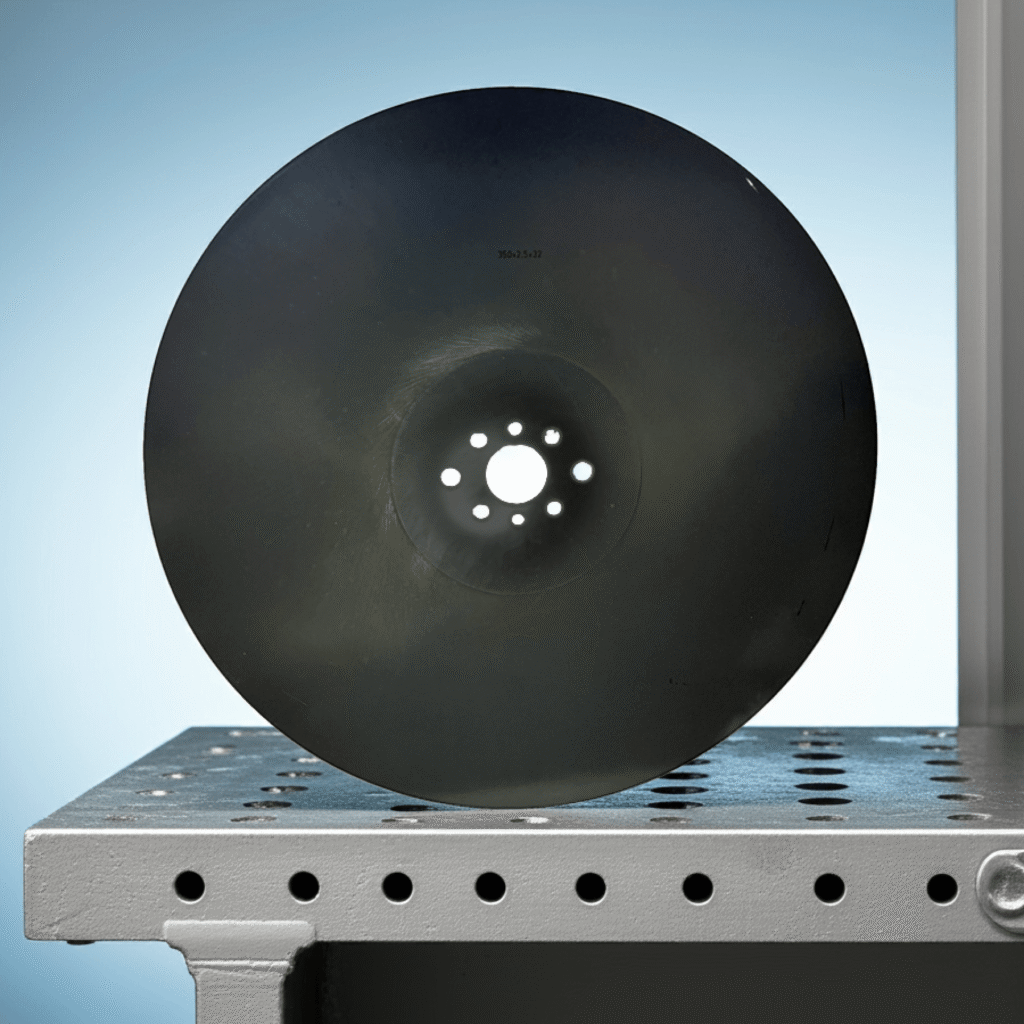
300-330mm diameter – 2.5mm thickness, 40mm Bore Reconditioned Black Oxide Blade
$80.00 -
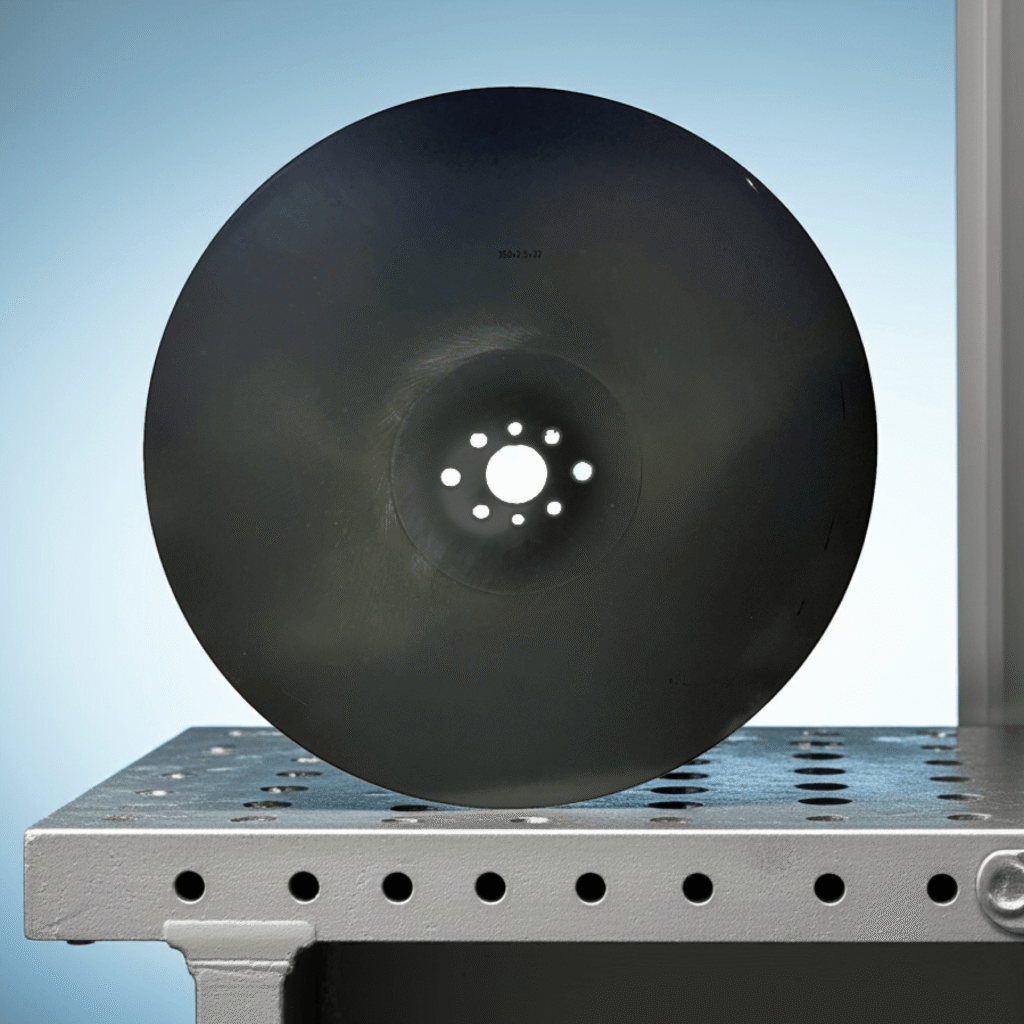
315mm-2.5mm-32mm M2 HSS Saw Blade
$138.97 -
350mm-2.5mm-32mm M2 HSS Cold Saw Blade
$159.04 -
350mm-2.5mm-32mm TIALN Coated Blade
Original price was: $201.96.$190.50Current price is: $190.50.
What Does Sharpening Actually Save You?
In 2026, a $400 HSS cold saw blade sharpened 22 times — our internal median resharpen count at Grand Blanc Industries — delivers approximately 22,000 cuts of mild steel at a total tooling cost of $930. The same 22,000 cuts on a replace-only program require 25 new blades at $10,000. Net savings: $9,070, or 91 percent (Cold Saw Blade Store sharpening pricing, 2026).
The savings compound at scale. A multi-saw shop running ten saws at the same pace would spend $9,300 per year on a sharpen-first program against $100,000 replace-only — that gap funds an additional CNC operator, a sawing supervisor, or capital improvements that pay back for years.
What’s the Break-Even Point?
Sharpening breaks even after a single cycle. The math: one $19 sharpening restores 800–1,000 cuts of cutting capacity on a blade that would otherwise need a $400 replacement to produce the same capacity. Even if you write off the round-trip shipping (UPS Ground typical $8–$12), the second blade in any shipment puts the order under free-shipping threshold and the math gets easier from there.
The chart shows what happens as the blade cycles: replace-only stays flat at $0.40 per cut because every batch starts a new $400 blade. Sharpen-first drops fast — by the second sharpening the cost per cut has fallen 90 percent and keeps falling through every subsequent cycle. The line never meets again.
How Do You Calculate Cost Per Cut?
Cost per cut is the single number you want pinned to the wall of your tool crib: total tooling cost (blade purchase + every sharpening on that blade) divided by total cuts achieved across the blade’s life. The formula is simple but most shops never compute it, which is why the sharpening-versus-replace argument often sounds harder than it is.
Worked example, 14-inch HSS in mild steel:
- Initial blade: $400
- 22 sharpenings at $19 each: $418
- Total tooling cost: $818
- Cuts per sharpen cycle: 1,000 (typical mild steel)
- Total cuts: 22 × 1,000 = 22,000 cuts
- Cost per cut: $818 / 22,000 = $0.037
Replace-only at the same 22,000 cuts: 25 new blades × $400 = $10,000, divided by 22,000 cuts = $0.45 per cut. That is 12× higher. For deeper coverage on what governs the resharpen ceiling, see how many times a cold saw blade can be resharpened.
When Does Replacement Actually Make Sense?
Replacement is the right call in three specific cases. First, when the blade reaches the manufacturer’s minimum usable diameter — the diameter at which the blade can no longer engage the workpiece given the saw’s mechanical envelope. Second, when four or more teeth break in a single resharpen cycle — the blade body is fatigued and the next failure could be the plate. Third, when the blade body is cracked, warped beyond 0.05 mm of plate flatness, or has been overheated to the point of visible blue discoloration.
In our 2024–2026 intake log, fewer than 5 percent of inbound blades met any of those retirement triggers. The remaining 95 percent were perfectly sharpenable and would have spent another 1,000+ cuts in service if their owners had not pulled them prematurely. For the operator-side inspection checklist, see how to inspect a cold saw blade.
What About the Hidden Costs of Sharpening?
The two real frictions of a sharpening program are turnaround and inventory. Same-day turnaround at our shop neutralizes the first one for any operation within 1–2 days of standard ground shipping. The second — inventory — needs a small planning change: keep one backup blade per machine in rotation so the saw never waits on a UPS truck. That is a $400 one-time investment that pays back in the first month against any unplanned downtime.
Shipping is the only ongoing cost worth modeling. Free ground shipping at three blades or more means most weekly or bi-weekly cycles ship at zero outbound cost. Inbound shipping (your dull blades to us) you absorb, typically $8–$15 per box on standard ground. Across 22 cycles, that totals $200–$300 — already inside the $9,070 net savings figure above, so the chart numbers hold even after shipping.
Frequently Asked Questions
Is it cheaper to sharpen or replace a cold saw blade?
Sharpening is 91 percent cheaper across the full life of a blade. A typical 14-inch HSS blade sharpened 22 times totals $818 in tooling against $10,000 to replace 25 blades for the same 22,000 cuts.
What’s the break-even on sharpening?
One cycle. A $19 sharpening returns ~$400 in deferred replacement value the first time the blade goes back into service.
When does replacing actually make sense?
At minimum-diameter retirement, after four or more teeth break in one cycle, or when the blade body is cracked or warped. Under 5 percent of inbound blades hit those triggers in our 2024–2026 data.
How do I calculate cost per cut?
(Initial blade $ + sum of all sharpening $) ÷ total cuts across blade life. A 14-inch HSS at $400 + 22×$19 / 22,000 cuts = $0.037 per cut. Replace-only at the same volume = $0.45 per cut.
Does sharpening hurt blade performance?
Professional CBN sharpening restores factory tooth geometry. Customers cannot distinguish sharpened from new blades in cut quality or feed rate. Manual sharpening, by contrast, can drift geometry 5–15 percent per cycle.
The Decision in One Line
If a blade is structurally sound and above its minimum diameter, sharpen it. If it is not, replace it. Across 50,000+ blades on our floor, that one rule covers more than 95 percent of every blade we have ever processed.
- Cold Saw Blade Store. Cold Saw Blade Sharpening Service. Retrieved 2026-06-22 from coldsawbladestore.com/cold-saw-blade-sharpening.
- Scotchman Industries. 5 Tips to Extend the Life of Your Saw Blade. Retrieved 2026-06-22 from scotchman.com/5-tips.
- Grand Blanc Industries. Resharpening log, 1984–2026; intake sample 2024–2026 (n = 4,180). Proprietary.
