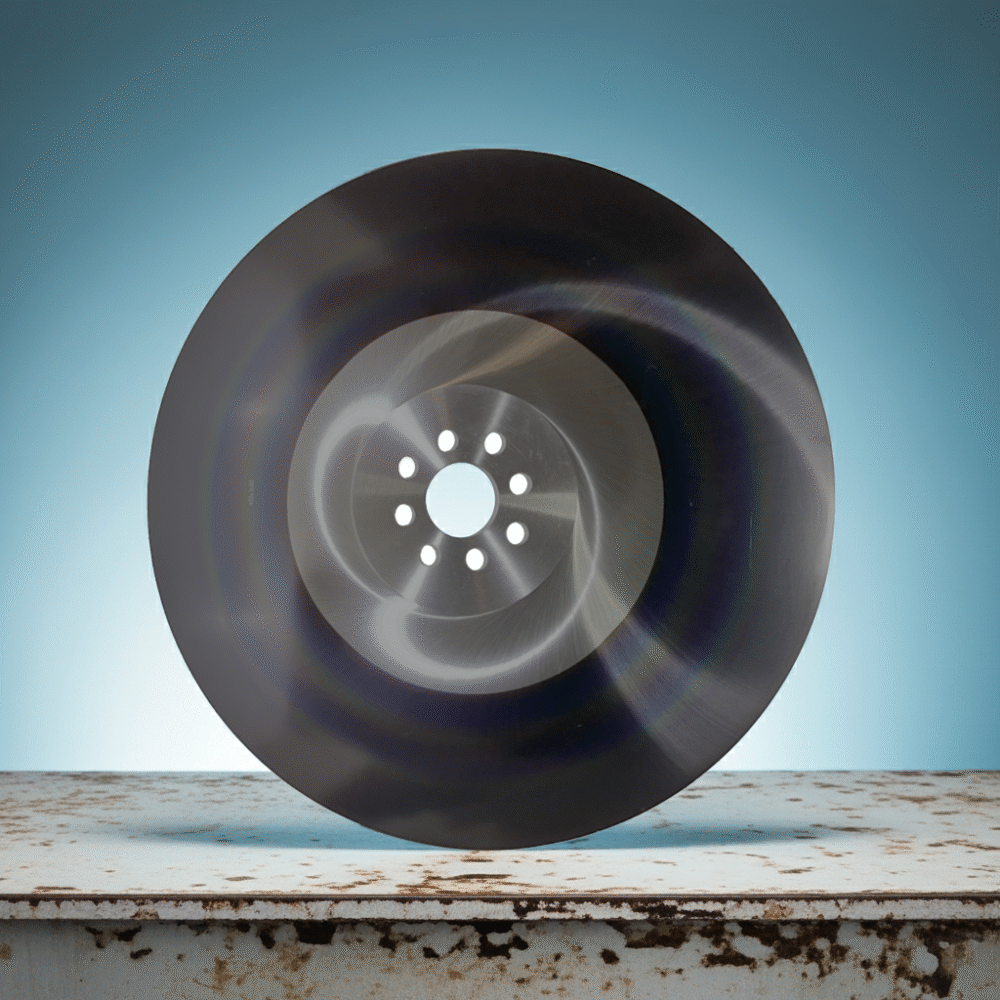
Cold saw blade sharpening is the difference between spending $930 and spending $10,000 to push the same 22,000 cuts through your shop. The service costs $15–$23 per blade at Grand Blanc Industries; the replacement it avoids costs $200–$600. After processing more than 50,000 blades on our floor since 1984, the question that still trips up most shops is not whether to sharpen — it is what the process does, when to send the blade out, and how to pack it.
This guide answers all three. It lays out what happens to your blade between the moment it arrives at our dock and the moment it ships back, the pricing tiers by diameter, the turnaround you can expect, and the four operating decisions on your side of the shipment that decide whether sharpening pays off or not.
How Much Does Cold Saw Blade Sharpening Cost in 2026?
Cold saw blade sharpening costs $15–$23 per blade at Grand Blanc Industries, scaled by diameter (Cold Saw Blade Store, “Cold Saw Blade Sharpening Service,” 2026). Industry pricing across reputable sharpening shops in the United States ranges $13.50–$25 for HSS cold saw blades. The number that matters is the comparison: a new 14-inch HSS blade costs $200–$600 depending on grade and coating, so sharpening is 4–8 percent of replacement cost per cycle.
Carbide-tipped blades grind on a separate program — same per-blade range, slightly different process. Volume discounts kick in at 20-plus blades per order. Most customers send a fixed quota every week or two and reorder fresh blades only when one of theirs has reached its minimum-diameter retirement (see the full maintenance guide for retirement triggers).
What Happens to Your Blade on the Grinding Floor?
A blade entering our floor moves through six stations: intake inspection, degrease, runout check, CBN grind, runout re-check, and final inspection. Each station has a specific job, and the order matters — skipping degrease before grinding burns the CBN wheel; skipping runout check before grinding produces uneven tooth heights. Across $2M+ in CBN equipment, we hold tooth-tip runout under 0.025 mm on every blade that ships back.
- Intake inspection. Visual check for chipped teeth, cracks, and warpage. Blades with cracks or severe warpage do not grind — we call you before any work begins.
- Degrease. Coolant residue is removed with a citrus-based degreaser. Residue burns into the grinding wheel and creates inconsistent removal.
- Runout check. Blade mounted to the grinder arbor; tooth-tip runout measured with a dial indicator. Out-of-spec blades get a corrective pass before primary grinding.
- CBN grind. Each tooth ground on rake and clearance angles to original manufacturer geometry, with flood coolant on the wheel. Removal: 0.8–1.2 mm per cycle.
- Runout re-check. Final tooth heights measured. Anything outside 0.025 mm gets a finish pass.
- Inspection & pack. Tooth-by-tooth visual with magnification. Blade oiled, sleeved, labeled with diameter, tooth count, and sharpen count for your records.
The whole sequence runs in under 90 minutes per blade on a 14-inch HSS. The bottleneck is degrease and intake — not the grind itself.
How Long Is the Sharpening Turnaround?
Same-day turnaround on most diameters at Grand Blanc Industries. Blades that arrive at our Grand Blanc, Michigan dock by 10 a.m. typically ship back the same afternoon via UPS Ground (Cold Saw Blade Store, “Sharpening Service,” 2026). Larger diameters (450 mm and up) or unusual tooth geometries may extend to 24 hours. We do not charge a rush fee — every order runs on the same priority queue.
The reason turnaround matters is downtime. A shop running one cold saw with no backup blade pays for downtime every hour that blade is out. With same-day turnaround, the math works even for single-blade operations. With overnight or week-long turnaround at other shops, you need at least two blades per machine in rotation — that doubles your inventory carrying cost and silently raises the per-cut price of every job.
When Should You Send a Blade for Sharpening?
Send a cold saw blade for sharpening at the first burr or first audible chatter, not after teeth chip. In our intake data across 4,180 orders in 2024–2026, blades arriving with chipped teeth show a 31 percent lower lifetime resharpen count than blades pulled at first burr. Waiting past the chip point costs you one to two resharpen cycles per blade — and on a 22-cycle median blade that is 5,000+ cuts of lost service life.
The trigger you want to develop is operator-level, not foreman-level: any operator running the saw should be authorized to pull a blade at first burr without management sign-off. The cost of unnecessary sharpening ($19) is rounding error against the cost of running a too-dull blade through a job (workpiece scrap + reduced blade life + saw motor strain). For the full inspection protocol, see our cold saw blade inspection guide.
How Do You Ship Blades for Sharpening?
Pack each blade in its original polyethylene sleeve, or wrap individually in shop towel and bubble wrap. Stack flat in a sturdy carton with corner support. Free ground shipping to Grand Blanc Industries kicks in at three blades or more per order. A typical 10-blade shipment ships in a single 18×18×6 carton at under 25 pounds.
Common shipping failures we see at intake: blades stacked unsleeved (40% of damaged-in-transit cases), used coolant left on the blade (10%), and undersized cartons that bend on the dolly (5%). One simple rule prevents every one of those: one blade, one sleeve, one ship slot. Add a packing slip listing diameter, tooth count, and your shop’s preferred return address.
Frequently Asked Questions
How much does cold saw blade sharpening cost?
$15–$23 per blade at Grand Blanc Industries depending on diameter: $15 (10″), $19 (12″), $23 (14″), $27 (16″), $31 (18″). New HSS replacements run $200–$600, so sharpening recovers 92–96 percent of blade spend per cycle.
How long does cold saw blade sharpening take?
Same-day turnaround on most diameters. Blades arriving by 10 a.m. ship back the same afternoon. Larger diameters (450 mm+) or unusual tooth geometries add 24 hours. No rush fee — every order is the same priority.
What’s the minimum order for sharpening?
No minimum. Free ground shipping at three blades or more. Most customers send 5–20 blades per shipment on a recurring weekly or bi-weekly cycle.
How does CBN sharpening differ from manual grinding?
CBN wheels cut HSS at high surface speeds without burning the cutting edge. Each cycle removes 0.8–1.2 mm of diameter versus 1–2 mm for aluminum-oxide manual grinding (Cold Saw Shop, “Do’s and Don’ts,” 2025). CBN extends total blade life 25–40 percent.
Do you sharpen carbide-tipped blades?
Yes. Carbide-tipped blades run on a separate grinding program with diamond wheels. Pricing is comparable per blade. Total resharpen ceiling on carbide-tipped is 8–15 cycles (Byler Industrial).
What the Numbers Tell You to Do
If your shop spends more than $5,000 per year on new cold saw blades, sharpening is the single fastest line-item cut available in your tooling budget. The setup is one phone call: pack your dull blades into a carton, drop the carton on UPS, and the same dollar value comes back to you 22 times over the life of each blade. There is no learning curve and no operational change required.
Featured products
-
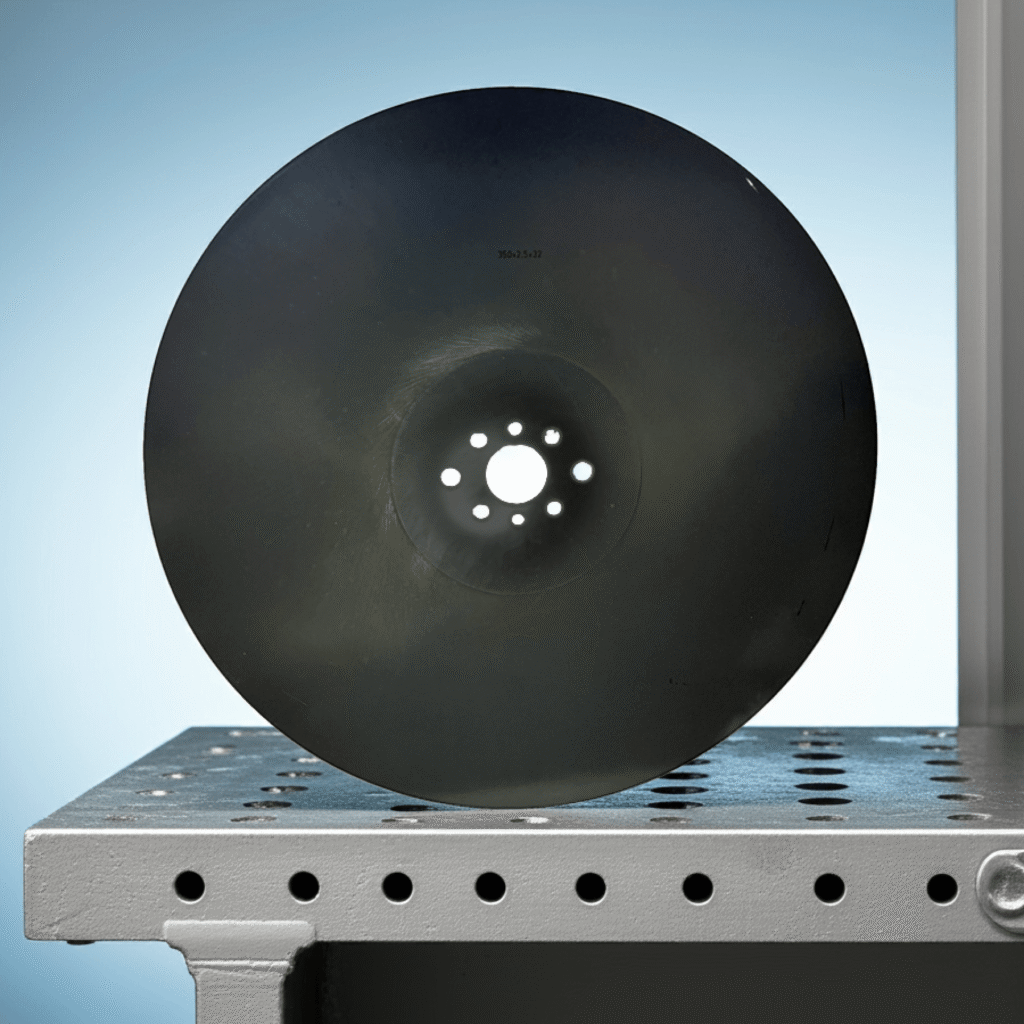
300-330mm diameter – 2.5mm thickness, 40mm Bore Reconditioned Black Oxide Blade
$80.00 -
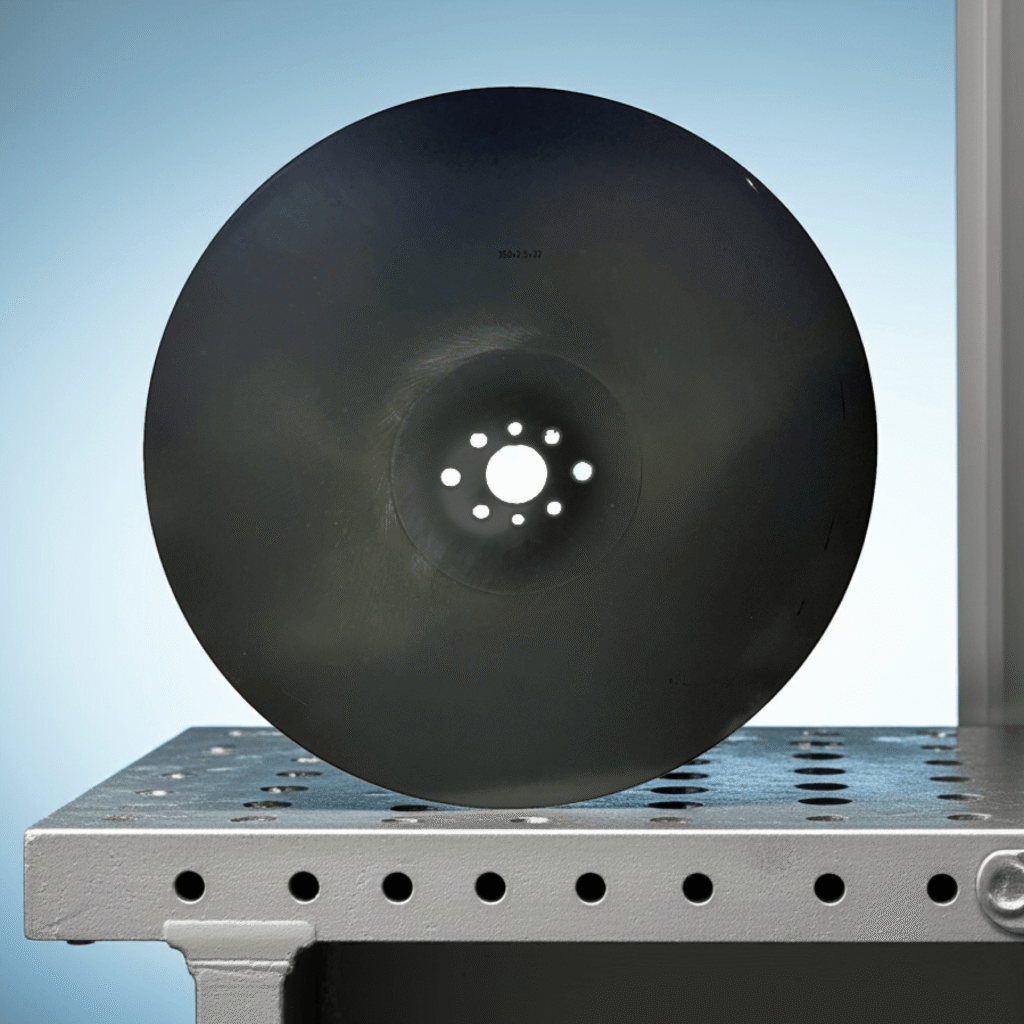
315mm-2.5mm-32mm M2 HSS Saw Blade
$138.97 -
350mm-2.5mm-32mm M2 HSS Cold Saw Blade
$159.04 -
350mm-2.5mm-32mm TIALN Coated Blade
Original price was: $201.96.$190.50Current price is: $190.50.