
Sharpening vs replacement: finding the 70% cost threshold is the quickest way to stop guessing and start making a simple, repeatable blade decision. In 2026, the math is clear for most shops, especially when your goal is to keep a cold saw blade cutting like it’s making it feel brand new instead of paying replacement pricing.
Key Takeaways
| Topic | The practical rule in 2026 |
|---|---|
| 70% threshold | If sharpening is at or below 70% of replacement cost, resharpen first. |
| Cost per cut | Track cuts, not invoices, because sharpening drives dramatic per-cut savings. |
| Typical sharpening range | In 2026, sharpening is often about $15-23 per blade while replacement can be $200-600. |
| Don’t ignore blade condition | If the blade is damaged, bent, or out of geometry, replacement may be the real best answer. |
| Shop speed matters | Same-day turn-around helps you keep production steady while you plan lifecycle costs. |
| Use proven lifecycle guidance | We build decisions around ROI and resharpen cycles, like in how many times a cold saw blade can be resharpened. |
- Sharpening vs replacement: finding the 70% cost threshold turns lifecycle cost into one clean yes-or-no.
- In 2026, many cold saw blade sharpenings price out far under 70% versus replacement, so sharpening wins fast.
- Replacement-only plans stack inventory and tooling cost, while resharpening lowers cost per cut.
- Maintenance and inspection protect your geometry and help you reach higher resharpen counts.
- If you want the full ROI math, start with Sharpening vs. Replacing Your Cold Saw Blade: The ROI Calculation.
- Need a data-driven ceiling for resharpen cycles? Use Cold Saw Blade Maintenance: The Complete Guide.
Why the 70% rule works in 2026 for a cold saw blade
Most shops don’t need a complicated policy. Sharpening vs replacement: finding the 70% cost threshold works because it compares like-for-like outcomes, not like-for-like invoices.
In plain terms, if you can sharpen your cold saw blade sharpening option for 70% or less of what replacement costs, you lower your tooling cost without sacrificing the cut output you already know works in your setup.
Our ROI framing is blunt because it has to be. The sharpening-versus-replacement decision is not actually a decision for most shops, it is a math problem that has only one right answer.
Use real 2026 numbers: sharpening cost, replacement cost, and the break-even point
Let’s put the cold saw blade decision into the exact format that operations teams can use in 2026.
70% threshold formula: If (Sharpening Cost ÷ Replacement Cost) ≤ 0.70, choose sharpening. If it’s > 0.70, replacement can be the better move.
On our cold saw blade sharpening cost guidance, we list sharpening pricing in a real-world range and replacement pricing in a much higher range. In 2026, sharpening is typically about $15-23 per blade, while replacement blades commonly land around $200-600.
| Example | Sharpening cost | Replacement cost | Sharpening as % of replacement | 70% threshold decision |
|---|---|---|---|---|
| Low sharpening vs mid replacement | $15 | $400 | 3.75% | Sharpen |
| High sharpening vs low replacement | $23 | $200 | 11.5% | Sharpen |
| Even without assumptions | $23 | $33 | 69.7% | Right at the line |
That’s why, in 2026, most rational decisions land on cold saw blade sharpening first. When sharpening stays far under 70% of replacement cost, you’re buying cost-per-cut reduction with very little downside, as long as the blade is still rebuildable.
ROI proof you can show your team: the 22-cycles vs replace-only example (2026)
If you need to justify the policy beyond the threshold, use the ROI example from our ROI calculation page. In 2026, a $400 HSS cold saw blade sharpened 22 times delivers approximately 22,000 cuts of mild steel at a total tooling cost of $930.
Then compare the same 22,000 cuts on a replace-only program. That approach requires 25 new blades at $10,000. The break-even point is not even a stretch, sharpening breaks even after a single cycle.
When you convert this into how your job shop actually feels costs, the threshold becomes even easier to apply. Tooling cost per cut drops, downtime shrinks because turnaround matters, and you stop overbuying inventory you don’t need.
What happens to your blade during cold saw blade sharpening (and why it supports the threshold)
A cost threshold is only as good as the process behind it. In 2026, our sharpening approach is built for geometric accuracy and stable cutting performance, which is exactly what your ROI depends on.
On our sharpening cost guidance, we describe a six-station grinding process with CBN wheels, and we cover how long the turnaround can take. The point is consistency. If each sharpening cycle restores performance close to the previous cycle, your cost per cut improves every time.
Cold cut saw blades not performing at their best is usually a geometry and finish problem, not an “everything must be replaced” problem.
When replacement beats sharpening, even if you hit 70%
Sharpening vs replacement: finding the 70% cost threshold is a powerful shortcut, but it is not a substitute for inspection. In 2026, the real question is whether the blade can be brought back without compromising the next cutting cycles.
Replacement can make sense when a blade is no longer a safe candidate for restoration, or when maintenance triggers say it is time. In our resharpen guidance, we frame the life ceiling and the triggers that move a blade out of service, including timing decisions (when to pull the blade) and retirement triggers.
- Damage or severe wear that indicates the edge geometry cannot be restored reliably.
- Out-of-spec condition where the next grind would remove too much material or risk stability.
- Repeated performance loss that indicates your process is not the only factor, the blade may have reached its effective retirement point.
- Maintenance gaps that caused rapid wear, then sharpening would just be repeating the same cycle faster than your ROI model expects.
If you’re unsure, run the decision in two steps. Step one is the 70% math. Step two is the inspection reality check. That’s how you keep cold saw blade sharpening working for you, not against you.
How many times can you resharpen? Use the resharpen ceiling to plan 2026 spend
The threshold tells you when sharpening is cheaper than replacement. The resharpen ceiling tells you whether sharpening will stay cheaper for long enough to matter.
Our guidance on how many times a cold saw blade can be resharpened gives you the practical expectations. For HSS blades, the median resharpen count is 22, with the upper tail reaching into the 30s. Carbide-tipped blades typically have fewer cycles.
Four main factors determine where your blade lands on the curve, material, grinding method, when you pull the blade, and retirement triggers. If you hit those triggers early, you waste potential cost advantage. If you ignore them, you risk pushing the blade into a condition where replacement becomes the better answer.
Maintenance makes the 70% threshold real, not theoretical
In 2026, we treat maintenance as part of the cost model. Blade life and performance depend on inspection, coolant management, break-in, and routine handling.
Our maintenance guide emphasizes that a maintained blade can last roughly 24,000–40,000 total cuts. That matters because your cost per cut only improves if the blade stays in tight geometric accuracy and stable cutting condition across cycles.
If you want to tighten your decision workflow, use maintenance as the “pre-check” before you apply Sharpening vs replacement: finding the 70% cost threshold. Clean decision inputs lead to better outcomes.
Cold saw blade pricing examples from the cold saw blade store, and how replacement changes the threshold
Because replacement cost changes by blade type, the 70% threshold changes too. That’s why your comparison must use your actual blade pricing, not generic numbers.
From our ROI calculation page, we list example blade prices and reconditioned options that show how fast the threshold favors sharpening when replacement is higher.
- 300-330mm diameter, 2.5mm thickness, 40mm bore, Reconditioned Black Oxide Blade: $80.00
- 315mm-2.5mm-32mm M2 HSS Saw Blade: $138.97
- 350mm-2.5mm-32mm M2 HSS Cold Saw Blade: $159.04
Now use the sharpening vs replacement cost range from our 2026 sharpening cost guidance. If sharpening is $15-23 and replacement is $138.97 or $159.04, sharpening sits well below 70%.
Still, it helps to see how “replacement cost” can jump for larger, heavier-duty blades. For example, a 450mm-3mm-50mm M2 HSS Cold Saw Blade lists at $326.31. The higher replacement number makes the 70% threshold more forgiving, which usually reinforces the sharpening decision in 2026.
Featured products
-
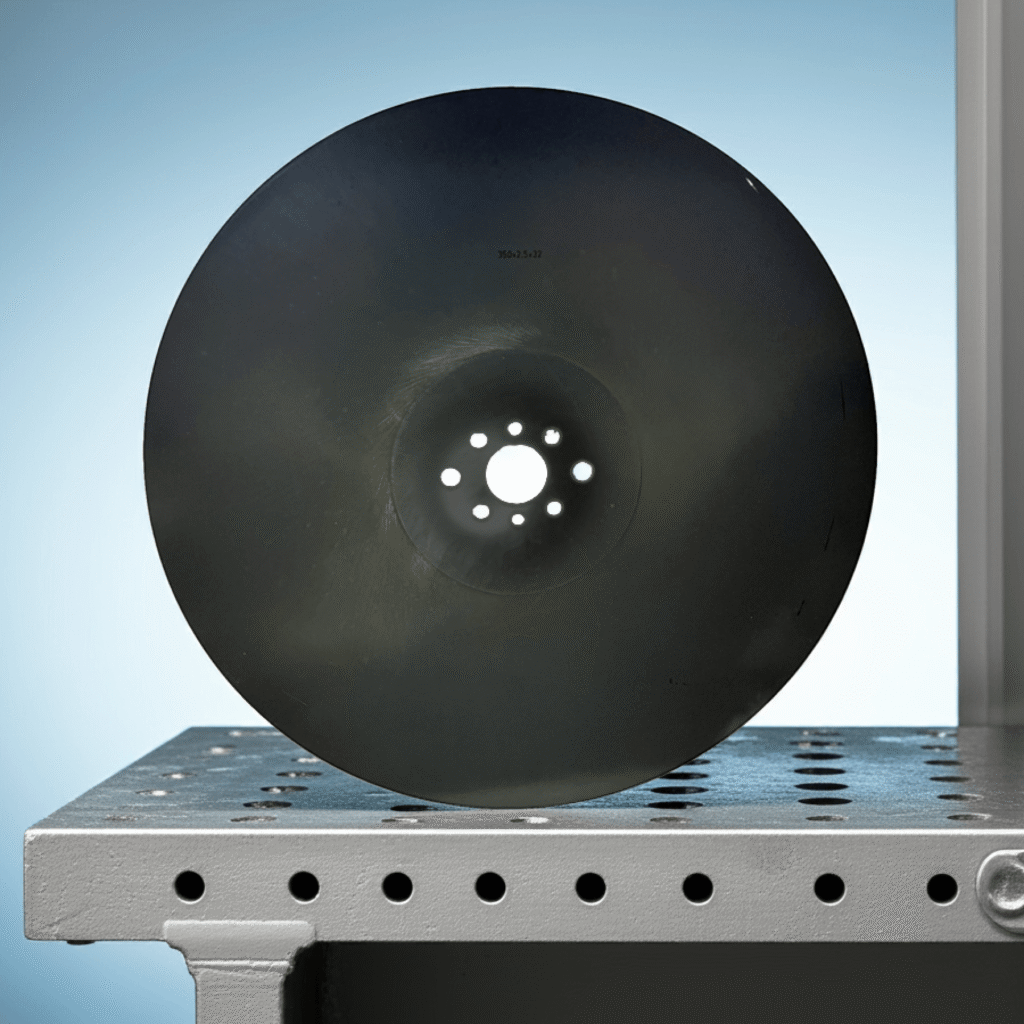
300-330mm diameter – 2.5mm thickness, 40mm Bore Reconditioned Black Oxide Blade
$80.00 -
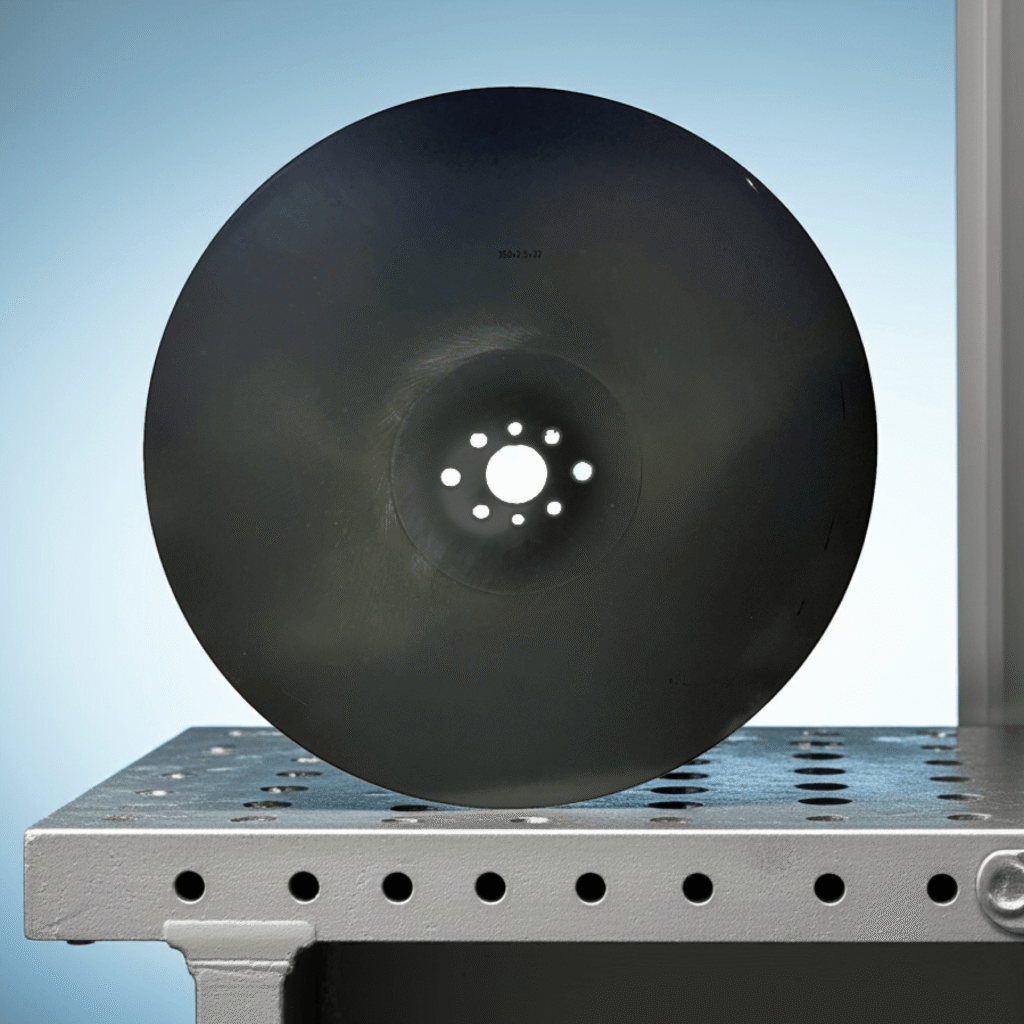
315mm-2.5mm-32mm M2 HSS Saw Blade
$138.97 -
350mm-2.5mm-32mm M2 HSS Cold Saw Blade
$159.04 -
350mm-2.5mm-32mm TIALN Coated Blade
Original price was: $201.96.$190.50Current price is: $190.50.
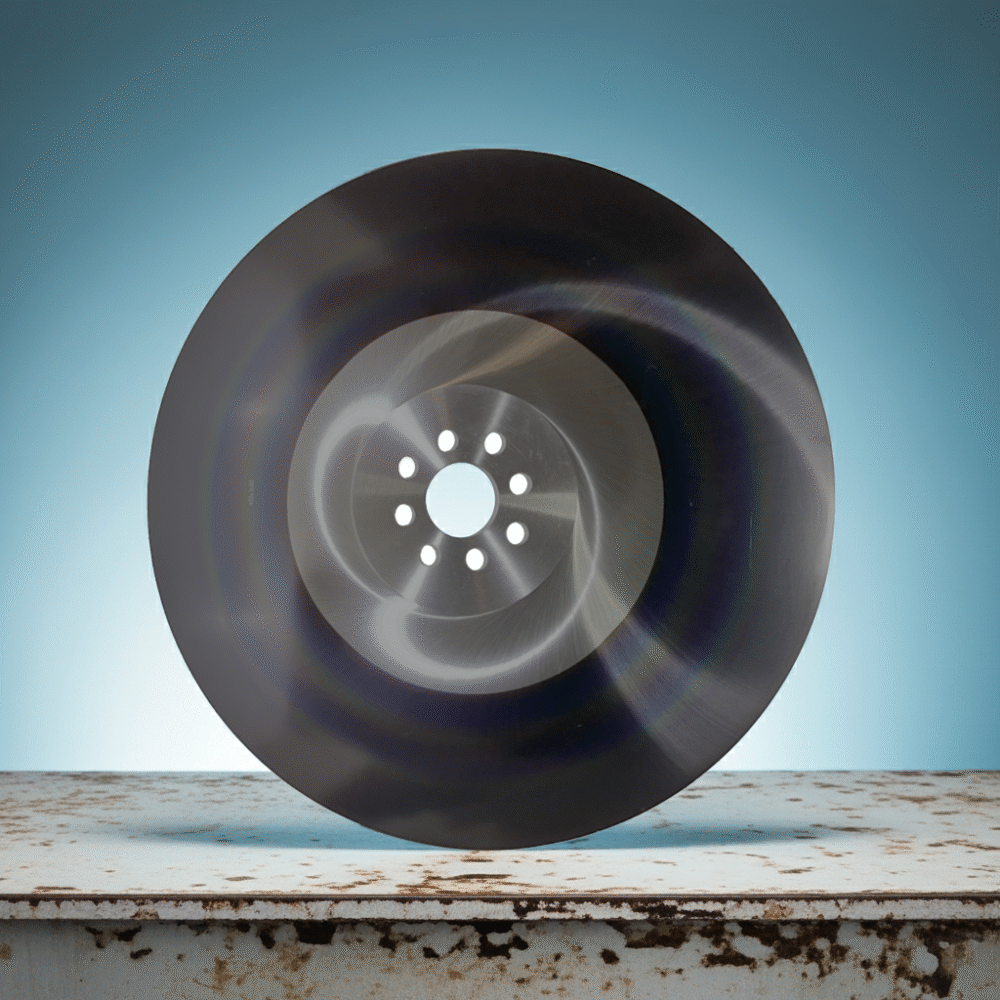
Where cold saw blade store fits: faster turn-around supports the sharpening plan
Even when sharpening is the lower-cost choice, your execution still matters. In 2026, we support the plan with serious shop capacity and fast turnaround, so you do not have to pause production to justify the math.
With over 2 million dollars in saw service equipment, we are able to offer same day turn-around on all of your sharpening needs. That reduces the operational pressure that usually pushes teams toward replacement “just to keep running.”
We are also set up to handle large-volume CNC sharpening. Over 8,000 square feet, we have expanded into the largest CNC sharpening company in the country. No one has the amount of CNC sharpening equipment under one roof that Grand Blanc Industries has in the US or the world for that matter.
A simple decision checklist for sharpening vs replacement in 2026
Here is the process we recommend to use Sharpening vs replacement: finding the 70% cost threshold consistently, blade after blade, in 2026.
- Get replacement cost for the exact blade you use. Use your cold saw blade store price for that same model, not an approximate replacement.
- Get your sharpening price for that diameter. In 2026, sharpening typically comes in around $15-23, but diameter changes pricing.
- Apply the 70% threshold. If sharpening is at or below 70% of replacement, sharpen first.
- Confirm the blade is still restorable. If the edge geometry is compromised beyond practical restoration, replacement may be the best move.
- Check your resharpen plan against the ceiling. If HSS median is around 22 cycles, plan procurement and scheduling around what you can realistically achieve.
- Lock in maintenance to protect life. Inspection, coolant, break-in, storage, and routine handling make the ROI show up on your floor.
Conclusion: Sharpening vs replacement: finding the 70% cost threshold should be your default in 2026
Sharpening vs replacement: finding the 70% cost threshold gives you a clear, defensible rule in 2026. When sharpening lands at or below 70% of replacement cost, sharpening is usually the best answer, and the ROI math backs it up strongly, including the 22-cycle example where sharpening produces dramatically lower cost per cut than replacement-only plans.
Use the threshold, confirm the blade is still a restorable candidate, then protect the outcome with cold saw blade maintenance. If you follow that workflow, cold saw blade sharpening becomes a predictable lifecycle strategy instead of an emergency purchase decision.
Frequently Asked Questions
What does “Sharpening vs replacement: finding the 70% cost threshold” mean for a cold saw blade?
In 2026, it means you compare sharpening cost to replacement cost, then choose sharpening when it is at or below 70% of replacement. For many cold saw blade setups, cold saw blade sharpening pricing stays far under replacement costs, so the decision is usually obvious.
Is cold saw blade sharpening worth it in 2026 if my replacement blade is expensive?
Yes, in most cases, because Sharpening vs replacement: finding the 70% cost threshold becomes even more favorable when replacement is higher. In our 2026 sharpening guidance, sharpening is often around $15-23 while replacement can be $200-600, so sharpening typically stays below the 70% line.
How do I calculate the break-even point between sharpening and replacement?
Use the threshold formula: (Sharpening Cost ÷ Replacement Cost). If the ratio is 0.70 or less, you sharpen. If it is above 0.70, replacement can be the better move, but you should also consider blade condition and whether restoration is practical.
How many times can a cold saw blade be resharpened before replacement makes more sense?
For HSS blades, our guidance in 2026 indicates a median resharpen count around 22, with some blades reaching into the 30s. This resharpen ceiling helps you plan spend, so sharpening stays cost-effective until the retirement triggers say it is time to move on.
Should we trust a fixed 70% rule, or does blade condition change it?
The 70% rule is the cost gate, blade condition is the safety gate. Even if sharpening hits the 70% mark, damaged blades or blades that cannot be restored reliably should move toward replacement as the next best option in 2026.
Where can I find cold saw blade sharpening pricing and turnaround details in 2026?
Start with the cold saw blade store pages for sharpening and sharpening costs, including cold saw blade sharpening cost and the sharpening services overview at cold saw blade sharpening. We list pricing by diameter and discuss same-day turn-around guidance for many sizes in 2026.
